Applying GSIL to Continuous Integration (CI)

1. What Is CI?
Continuous Integration (CI) is an automated development process in which developers frequently integrate and test newly written code, catching defects early to reduce rework effort and cutting test effort through automation. Achieving this can substantially improve development efficiency.
2. Achieving CI for Control ECU Software
Achieving CI for control ECU software in a HILS or real-vehicle verification environment isn't easy. HILS does support automated testing, but because HILS rigs are expensive, individual developers can't necessarily access a HILS environment whenever they need to verify something, and debugging itself is difficult. With a real vehicle, automated testing simply isn't possible.
By contrast, Ubiquitous AI's control-ECU-development simulation tool GSIL makes CI easy to achieve.
3. Example: Achieving CI with GSIL
With GSIL, when a developer checks in source code, it's possible to automatically run analysis with the high-precision static-analysis tool CodeSonar, application-acceleration analysis with Codee, a virtual-ECU build for GSIL, Python-based tests, GSIL's automated exhaustive testing, timing verification with chronSUITE, and coverage measurement with Testwell CTC++ — all fully automated, with results available to review. CodeSonar, chronSUITE, and Testwell CTC++ are all tools Ubiquitous AI offers.
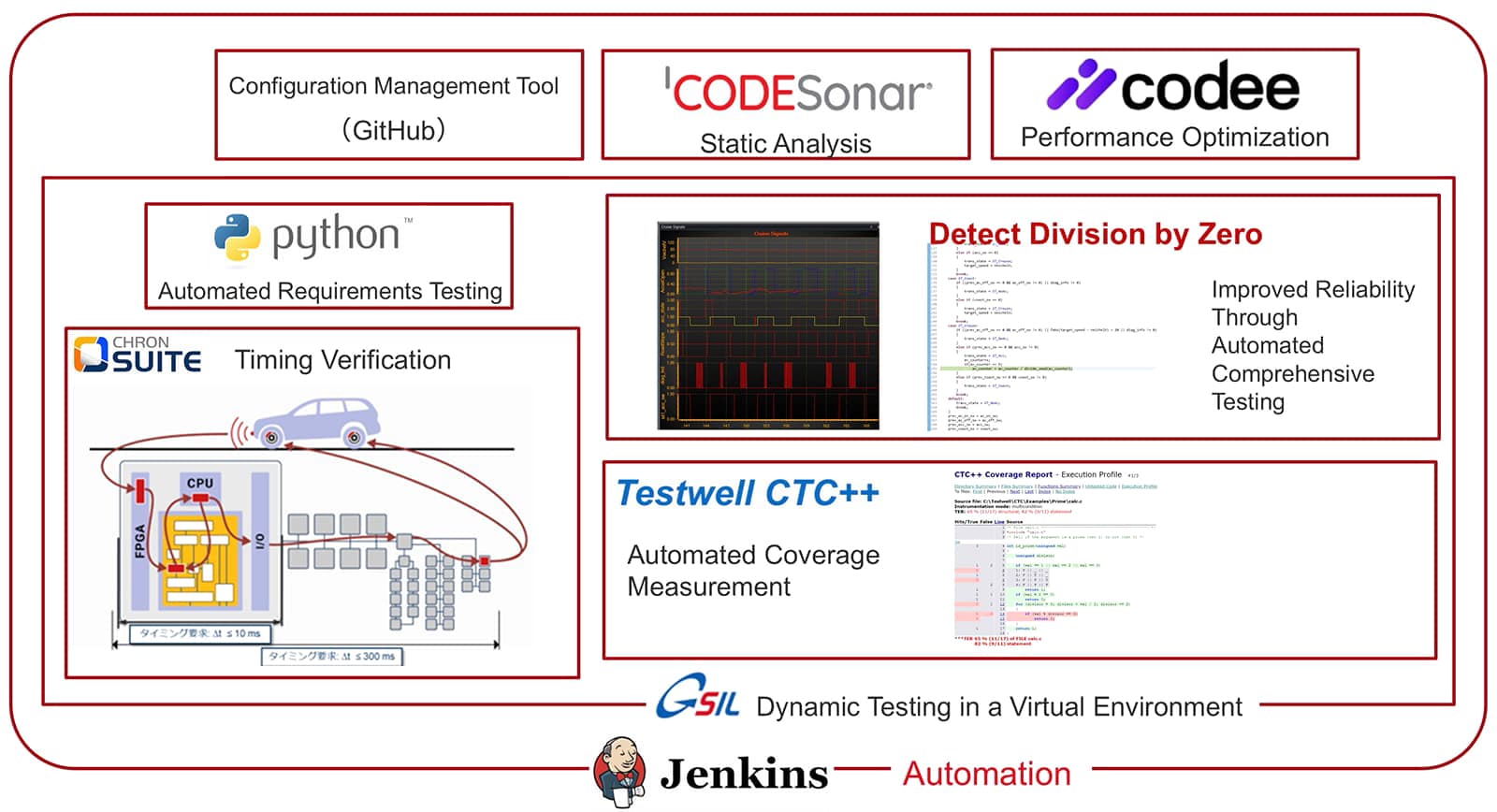
CI execution across multiple tools with GSIL
4. Python-Based GSIL CI Setup and Results
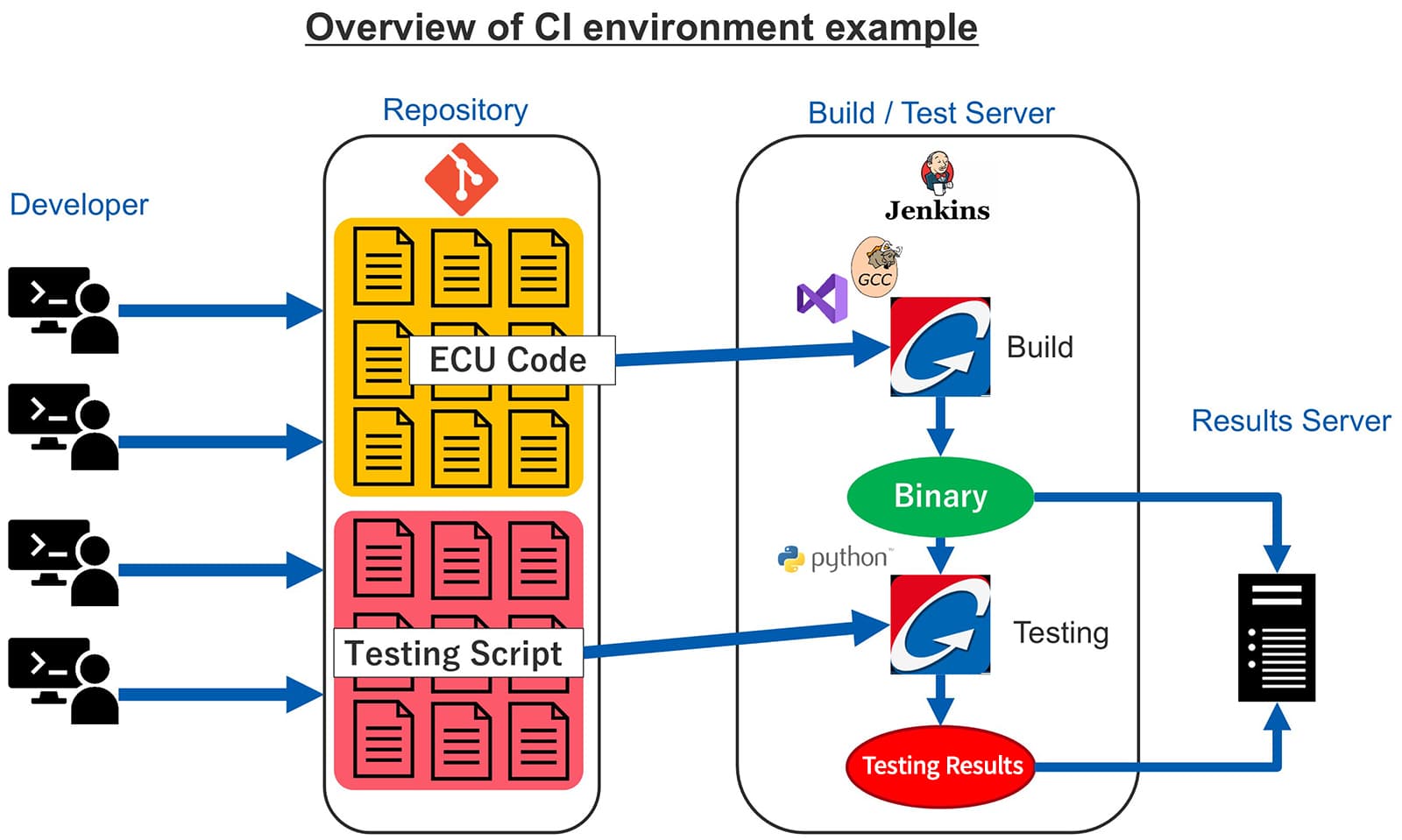
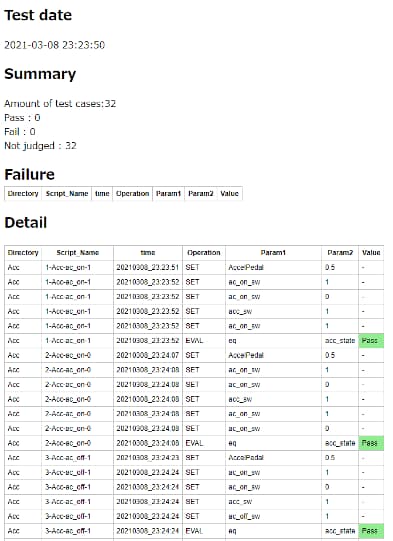
Python-based CI execution results
GitLab Runner-based CI configuration
5. GitLab Runner-Based GSIL CI Setup and Results
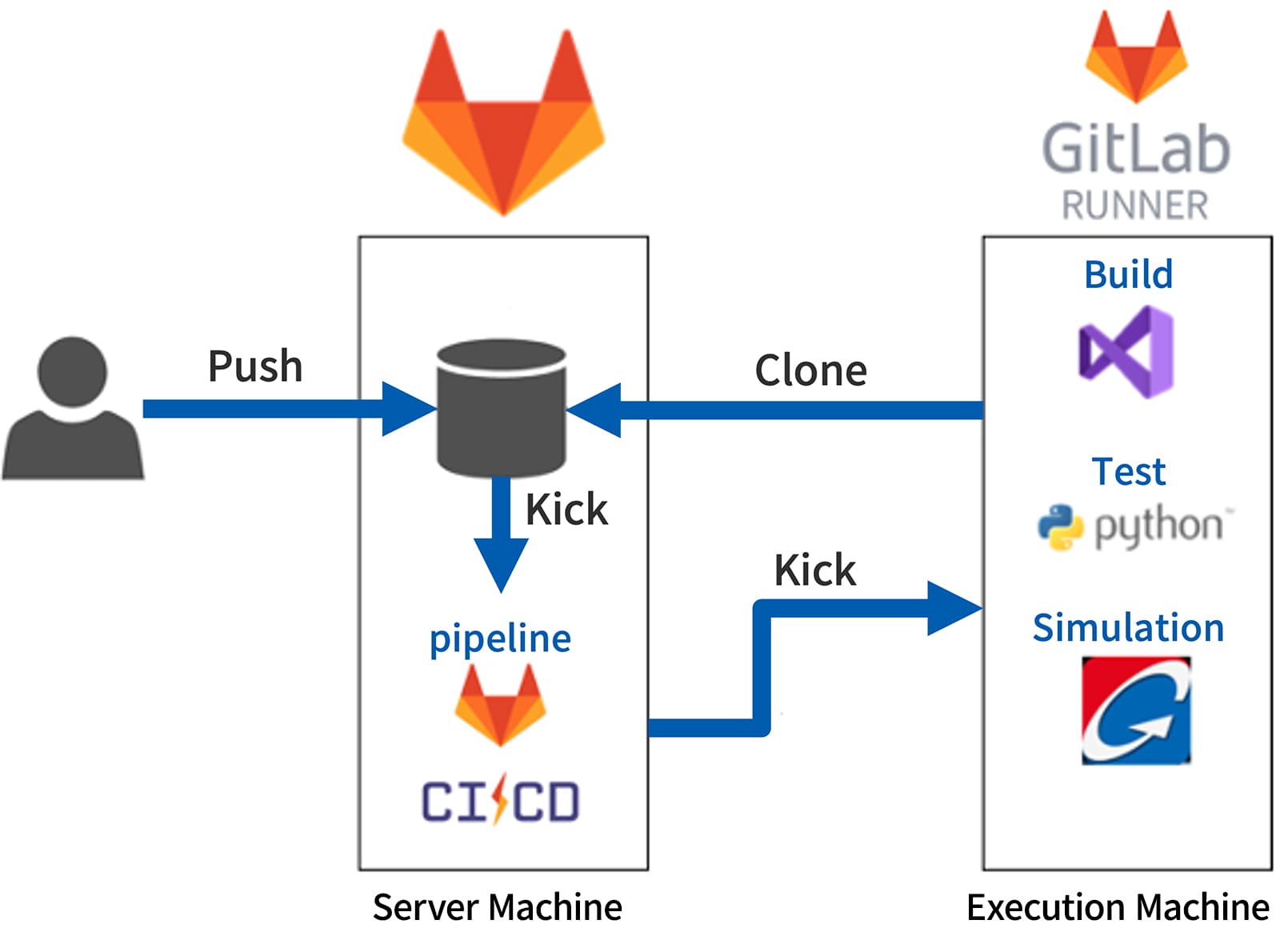
GitLab Runner-based CI configuration
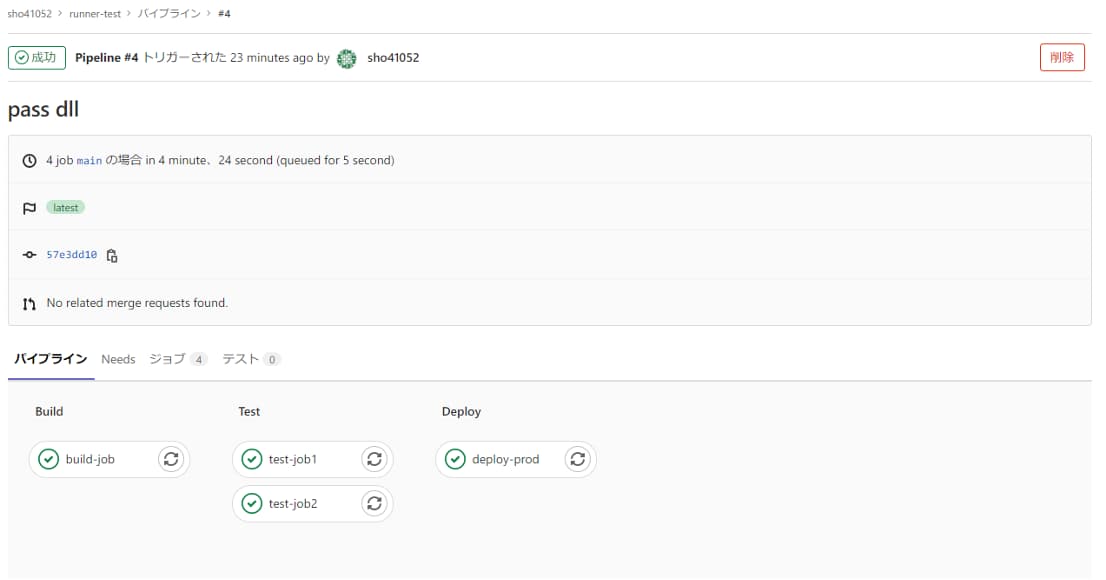
GitLab Runner-based CI execution results
Automotive control ECUs demand especially high performance, requiring extensive testing to achieve it. Setting up and running that testing every time takes considerable effort — but being able to run test cases pre-built in Python or CSV eliminates much of that effort.
6. Summary
Using GSIL makes CI achievable in situations where HILS or real hardware would make it difficult, substantially improving development efficiency.
Author

Ubiquitous AI Corporation
Embedded Business Unit 3, Deputy General Manager
Hiroshi Ueda
After university, Ueda joined a Tier 1 supplier and worked on ECU software development. He later worked overseas as an embedded software development engineer before returning to Japan, where he has been engaged in technical sales for automotive software since 1998. Drawing on his own experience, he sources overseas software products that help solve customers' development challenges and delivers them to engineers in Japan.
Related Insights
-
Making the Most of Test Assets in Automotive ECU Simulation
The importance of ECU control software keeps growing, and the test effort that comes with it has become enormous. How can teams make the best use of their test assets? Here we introduce techniques for using those assets effectively, along with the tools that support them.
-
Strengthening Competitiveness in Automotive Control ECU Software Development with SILS
In recent years, more automotive control-software teams have adopted Software-in-the-Loop Simulation (SILS) to make development more efficient. SILS allows code to be verified easily on a PC before hardware is complete, enabling more efficient software development and verification, along with reduced effort.
-
Reducing Rework Between OEMs and Suppliers by Sharing an ECU Control Software Environment
In ECU control software development, defects found later in the V-model require more rework. Learn why early defect detection is critical for reducing costs.
-
Applying GSIL to MILS Development
If MILS enables model-based development, automatic code generation, and ECU validation, what additional benefits can a SILS tool like GSIL provide?
-
SILS Testing Using CAN — Vehicle-Wide Simulation and Test Case Reuse
SILS enables ECU software verification on a PC before hardware is available, supporting CI, automated testing, reduced rework, and improved reliability. GSIL adds CAN support for broader application.
-
Improving Development Efficiency in Embedded Control Software Through Simulation
Improve embedded control software development efficiency with GSIL simulation on PC. Reduce rework, enable automated testing and CI/CD, and boost reliability before hardware is ready.
-
Measuring System-Level Test Coverage
Coverage measurement helps track testing progress, but 100% coverage does not guarantee all input combinations have been tested or that defects are absent.
-
Challenges and Solutions for CI in Embedded Control Software
Continuous Integration (CI) automates static analysis, unit testing, and integration testing after each code commit, improving quality and development efficiency.
-
Improving ECU Reliability with GSIL's Comprehensive Automated Test Case Generation
Improve ECU reliability with GSIL’s comprehensive automated test case generation. Detect hard-to-find runtime errors like division by zero and buffer overruns through exhaustive simulation testing.
-
Achieving 90%+ ECU Software Coverage — GSIL's Automated Exhaustive Testing
Struggling to improve coverage or find bugs caused by unexpected input combinations? Learn how GSIL's automated exhaustive testing supports Shift-Left development and improves test effectiveness.